
Dental Dentures in Mangawhai

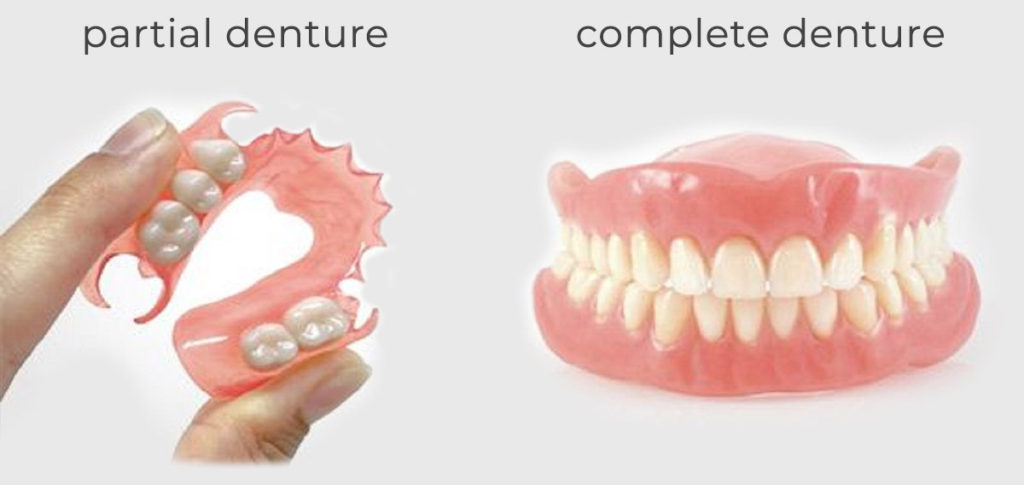
Two types of dentures are available – full and partial dentures.
Full dentures are used when all the teeth are missing, while partial dentures are used when some natural teeth remain.
Full dentures can be either permanent or immediate. Made after the teeth have been removed and the gum tissue has begun to heal, a permanent denture is ready for placement in the mouth about eight to 12 weeks after the teeth have been removed.
Unlike permanent dentures, immediate dentures are made in advance and can be positioned as soon as the teeth are removed. As a result, the wearer does not have to be without teeth during the healing period. However, bones and gums shrink over time, especially during the healing period following tooth removal, so immediate dentures require more adjustments to fit properly during the healing process and will require relining to make up for shrinkage and healing gums after six months. Your dentist will discuss your unique situation with you, to help you make a decision on whether permanent or immediate dentures are best you.
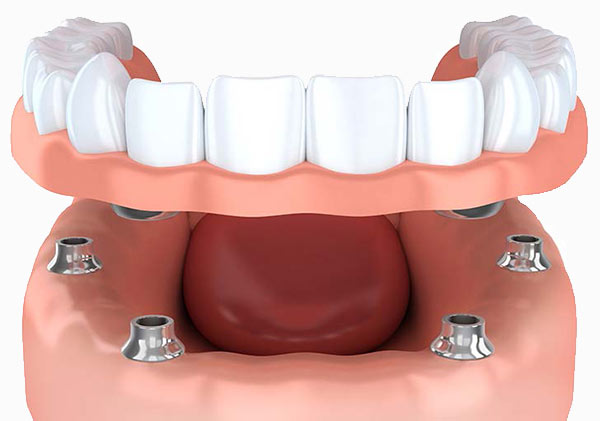
For patients with full dentures Implant Retained Dentures are a great option, they are like natural teeth because they are anchored securely to your jawbone by implants.
Other advantages to Implant retained Dentures include:
Not everyone is a candidate for implants, so take the time to talk to your dentist about what the best option is for you, when you need to replace missing teeth.
As explained above, the main difference is when they are fitted.
Immediate dentures are made based off the size and shape of your mouth right after extraction. The swelling of your gums and the shape of your mouth will be quite different at this time, compared to when you are completely healed and ready for your permanent teeth. Immediate dentures are designed to be adjusted with your mouth during the healing process. The main advantage of immediate dentures is that you do not have to go out in public without teeth following tooth removal, as they serve as a bandage to control bleeding and protect gum tissue. Also, if you have immediate dentures you can start adjusting your speech to wearing the denture immediately. The creation of immediate dentures may require four to five dental visits prior to receiving your final set. From tooth extraction, trial samples and wax mockups, to the issue of your dentures the process involves a few steps, to ensure we get the best fit possible for you. However not everyone is a good candidate for immediate dentures. Your dentist may advise against immediate dentures depending on your general health and oral health.
At Dental Domain we will work with you to preserve your natural teeth if possible, rather than extract them, but sometimes permanent dentures are the only way to provide the appearance of teeth and facilitate eating and speaking. Getting permanent, full dentures takes about three to six weeks.
The denture-making process involves several dental appointments and follows these steps:
When you first receive your permanent dentures, your dentist may recommend that you wear them 24 hours a day, even while sleeping, because this is the easiest and quickest way to determine whether there are any spots that need adjustment. It is important to ensure a good fit right away, because poorly fitting dentures can be irritating to the gums.
Once you have adjusted to the dentures, you can remove them at night to allow normal stimulation of the gum tissues by the tongue and saliva, which helps keep your gum tissue healthy.
Your dentures will be designed to blend with your natural teeth colour, and will have a natural colouring. Our dentists will always try to get the best shade match to blend with any existing teeth, and they will check you are happy with the shade chosen before they are made.
A removable partial denture usually consists of replacement teeth attached to a pink or gum-coloured plastic or chrome base, which is sometimes connected by metal framework that holds the denture in place in the mouth. Partial dentures are used when one or more natural teeth remain in the upper or lower jaw.
A fixed dental bridge fills a gap created by one or more missing teeth. It replaces one or more teeth by placing crowns on the teeth on either side of the space and attaching artificial teeth to them. This “bridge” is then cemented permanently into place. Keeping the surrounding, supporting teeth healthy is essential to get the maximum benefit from a dental bridge, so be sure to follow a regular oral care routine of twice-daily tooth brushing and daily flossing.